
Long before it became a place of welcome, the Williams House stood as a symbol of vision and permanence on Amelia Island. Today, recognized as a Florida Heritage Landmark Site, it remains one of the oldest historic homes in Fernandina Beach, a quiet testament to the layers of life that have unfolded within its walls.
Built in 1856 by a wealthy Boston banker, the home was constructed with intention and presence. Just two years later, it was purchased by Marcellus A. Williams, whose name it now carries. The Williams family would steward the estate for almost a century, shaping its story across generations.
To walk through the house today is to feel that continuity.
Details That Endure
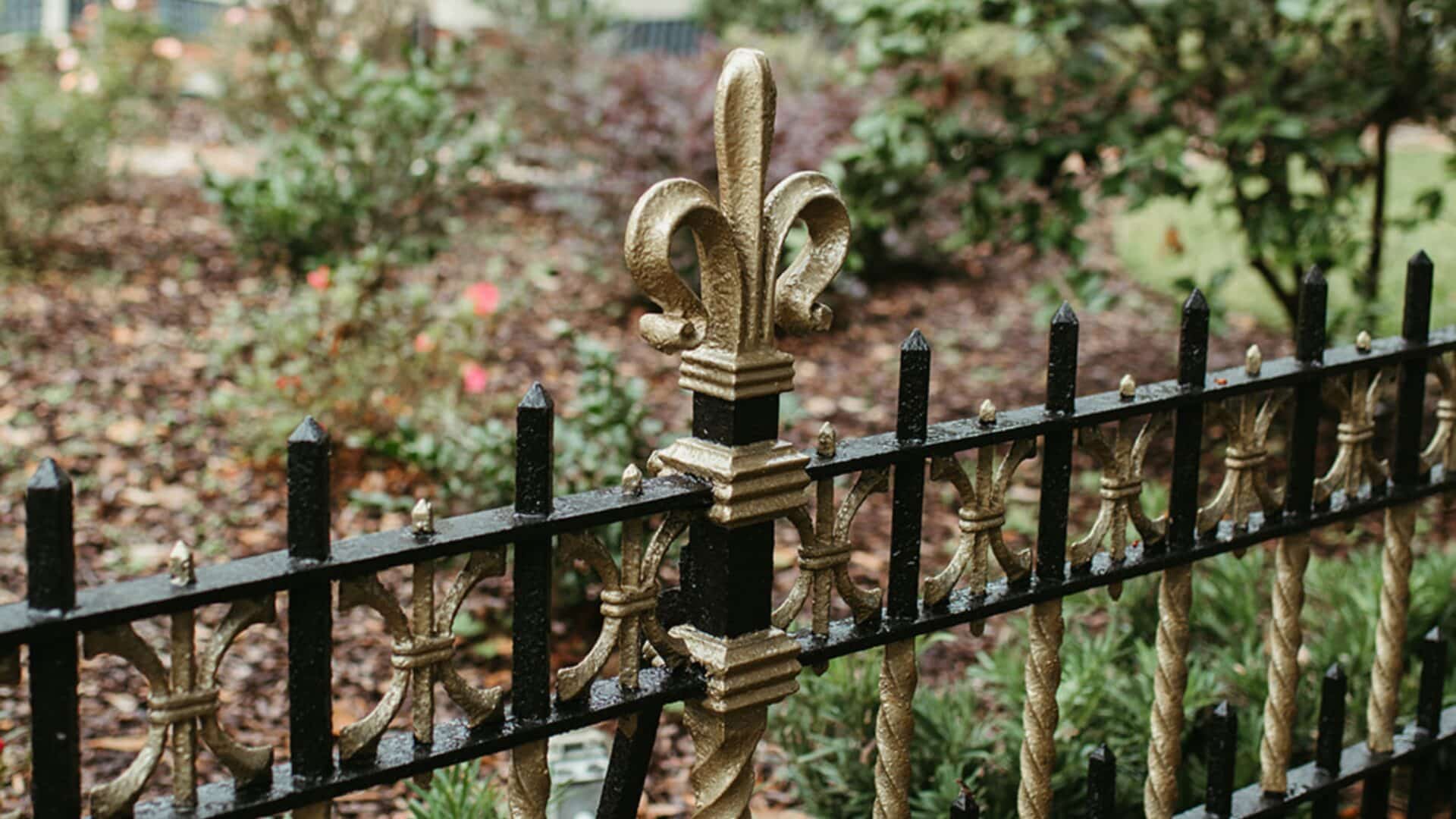
The original iron fence still stands guard along the property, the only remaining fence in Fernandina Beach to have survived the Civil War. Its fleur-de-lis detailing reflects the island’s early French influence, a quiet nod to the many flags that once claimed this coastline.
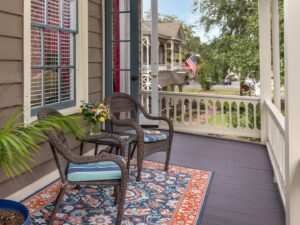
Along the veranda, intricate gingerbread trim catches the light. The design was created by noted New York architect Robert Sands Schuyler, who made a formal agreement that it would never be duplicated elsewhere.
It’s said that during its construction, someone remarked that the design felt perfect. Schuyler gently disagreed, believing that only God could create something truly without flaw, and instructed the craftsman to incorporate a single, intentional imperfection into the pattern. A quiet detail, rooted in a tradition seen in Persian artistry, where even the most intricate works carry a subtle flaw by design.
To this day, the pattern remains entirely unique, an architectural signature you will not find repeated.
A House That Has Lived
For more than 100 years, the Williams family’s descendants have called this estate home. Within these rooms, daily life unfolded, celebrations were hosted, letters were written, and Veronica continues to write love letters to/from Emma and Marcellus, totally imaginary but based on history. You can find them in the antique typewriter in the main hallway
The house was never meant to be a museum. It was built to be lived in. That spirit remains.
Historic, Yet Present
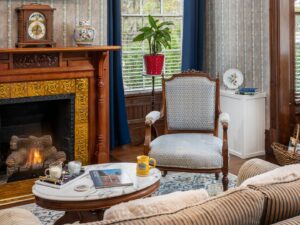
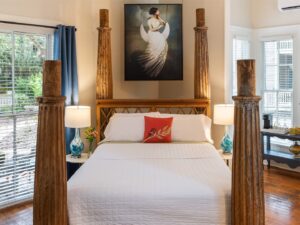
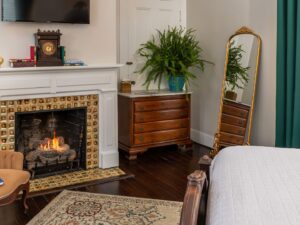
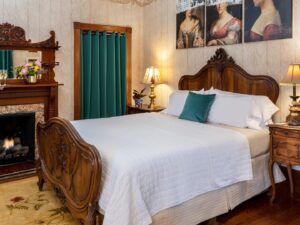
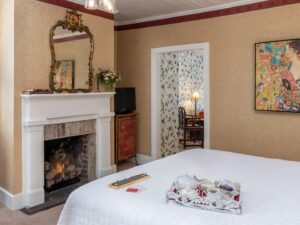
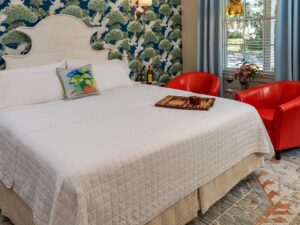
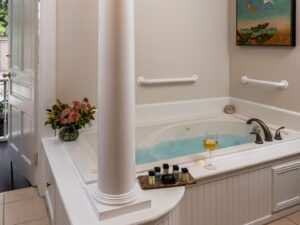
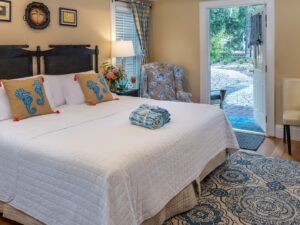
Today, the Williams House balances reverence with renewal. Original details stand alongside thoughtful updates that allow modern guests to experience the estate comfortably, without diminishing its past.
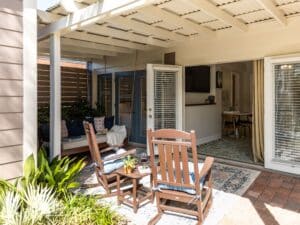
We honor the history. But we do not freeze it in time. Instead, we invite you to become part of it, to walk the same veranda, pass through the same iron gates, and feel how seamlessly past and present coexist here.
Because at the Williams House, history is not behind glass. It is beneath your feet.